
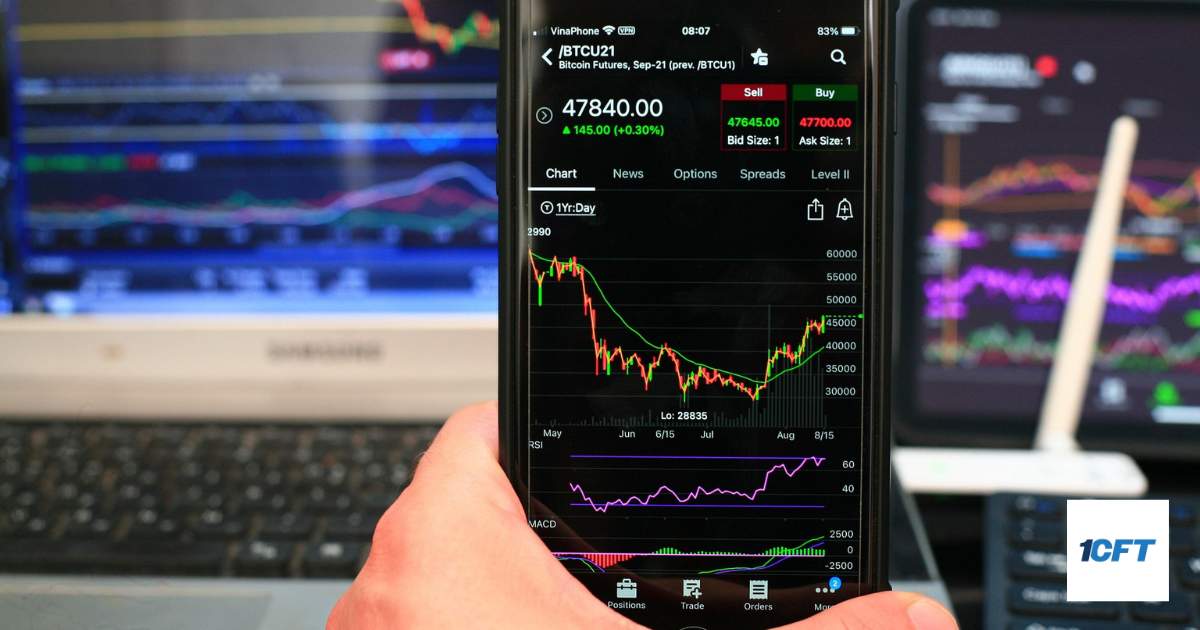
A trading challenge is not won through market analysis alone. Success also depends on preparation, discipline and the ability to monitor performance in real time. A well-designed trading app can support these areas by helping traders track results, manage risk and stay focused on their plan instead of reacting emotionally to every market movement.
What Tools Make It Easier to Control a Trading Account?
One of the biggest challenges in funded trading is maintaining awareness of what is happening on the account at all times. Many traders focus heavily on charts and entry signals while paying far less attention to the operational side of trading. However, a challenge can be lost not only because of a poor setup, but also because a trader loses track of drawdown, risk exposure or account rules.
This is why account monitoring tools are so valuable.
A good trading app should provide a clear overview of account status. The trader should be able to see the current balance, equity, floating profit and loss, available margin and recent trading activity without searching through multiple screens. Quick access to this information makes decision-making more structured.
Real-time balance and equity monitoring can help traders understand how open positions are affecting the account. A trader may believe that everything is under control based on closed results, but floating losses can paint a very different picture. Seeing this information immediately allows for more informed decisions.
Another useful feature is a dashboard displaying challenge progress. Traders often perform better when they understand where they stand in relation to profit targets and loss limits. However, this should not encourage obsession with the finish line. The dashboard should be used as a reference point rather than a source of pressure.
Trade history is equally important. The ability to review previous trades, including entry prices, exit prices, timestamps and outcomes, helps traders identify patterns in execution. It becomes easier to notice whether losses cluster around specific sessions, instruments or emotional states.
Many traders also benefit from push notifications and alerts. These can remind them when predefined levels are approaching. For example, alerts related to drawdown, profit milestones or scheduled economic events can improve awareness and reduce the chance of avoidable mistakes.
A professional Prop trading firm understands that operational discipline is just as important as technical analysis. Tools that improve visibility help traders maintain that discipline.
Customization is another valuable element. Every trader works differently. Some want detailed statistics on the home screen, while others prefer a simplified layout that reduces distractions. A flexible app allows traders to prioritize the information that matters most to them.
The app should also display account rules clearly. Forgetting a maximum daily loss threshold or misunderstanding a challenge condition can have serious consequences. Having these details easily accessible reduces the risk of accidental violations.
For traders using 1CFT, the ability to monitor account status quickly can make a meaningful difference during a challenge. Instead of relying on memory or assumptions, traders can make decisions based on current information.
An Investment platform that combines account management with performance tracking can reduce unnecessary complexity. Rather than switching between different systems, traders can review both market exposure and challenge progress in one place.
It is important to remember, however, that no app replaces judgment. Technology provides information, but traders still need to interpret that information correctly and act responsibly.
The goal of these tools is not to encourage constant checking or emotional reactions. Their purpose is to support structure, awareness and better decision-making throughout the challenge.
Which Features Help Manage Risk and Performance?
Risk management is one of the most important factors in funded trading, which is why the best app features are often those that help traders avoid mistakes rather than increase activity.
One of the most valuable features is real-time drawdown tracking. Instead of calculating losses manually, traders can immediately see how much room remains before approaching important account thresholds. This visibility can prevent impulsive decisions after difficult sessions.
Daily loss tracking is especially useful. Many traders understand the rules intellectually but lose awareness during stressful market conditions. Having a visible reminder of daily exposure encourages caution and reinforces discipline.
Position size calculators are another practical tool. Before entering a trade, traders can estimate the appropriate position size based on account balance, stop loss distance and desired risk. This reduces guesswork and promotes consistency.
Risk-reward calculators can also support planning. They allow traders to evaluate whether a setup aligns with their strategy before committing capital. If the potential reward does not justify the risk, the trade can be avoided.
Performance analytics provide another layer of insight.
A trader should be able to review statistics such as:
- average win,
- average loss,
- win rate,
- profit factor,
- maximum drawdown,
- trade frequency,
- consecutive wins and losses.
These metrics help traders understand whether they are following a sustainable process.
Trade journaling features can be particularly powerful. Recording not only the technical details of a trade but also the reasoning behind it creates opportunities for improvement. Over time, traders can identify recurring mistakes and successful habits.
Economic calendar integration is another useful function. Major news releases often influence volatility and execution quality. Traders who know when important events are approaching can prepare accordingly or avoid unnecessary exposure.
A strong Prop trading platform should also allow traders to filter and organize performance data. For example, they may want to compare results by instrument, session or setup type. This makes it easier to identify where their edge truly exists.
Alerts connected to predefined conditions can further strengthen discipline. Notifications related to profit milestones, loss limits or trading schedules can reduce emotional decision-making by creating clear boundaries.
Automation features may also help with risk control. For instance, some traders use predefined stop losses, take-profit levels or maximum daily risk settings to remove emotional interference.
For traders using 1CFT, these tools should support consistency rather than encourage excessive activity. The objective is not to monitor every market fluctuation obsessively, but to stay aligned with the trading plan.
A trader who understands their numbers is often less likely to panic during temporary setbacks. Data creates context. Instead of reacting emotionally to one losing trade, the trader can evaluate whether the current situation fits within normal expectations.
Ultimately, the best features are not necessarily the most advanced ones. They are the ones that help traders follow their strategy and protect the account.
How Can You Use an App to Improve Your Chances of Success?
Technology becomes valuable only when it supports behavior.
Many traders download trading apps expecting them to improve performance automatically. They believe that more data, more charts and more notifications will create better results. In reality, success depends on how the tools are used.
- The first step is building a routine.
Before the trading session begins, the trader can use the app to review account status, check upcoming economic events and confirm personal risk limits. This preparation reduces impulsive decisions later.
During the session, the app should serve as a reference point rather than a distraction. Traders can monitor exposure and challenge progress without constantly changing plans because of short-term fluctuations.
- After the session, the app becomes a review tool.
This is where traders can analyze completed trades, update journals and identify areas requiring improvement. Small adjustments based on repeated observations often lead to meaningful progress over time.
One effective practice is setting predefined alerts.
For example:
- alerts when approaching daily loss limits,
- reminders to stop after a fixed number of trades,
- notifications before major news releases,
- prompts for end-of-day reviews.
These alerts create structure and reduce the likelihood of emotional decisions.
Another useful habit is reviewing weekly statistics rather than focusing exclusively on daily outcomes. A single session rarely tells the full story. Weekly reviews provide broader perspective and help traders identify genuine trends.
Traders should also avoid overcomplicating the process.
Having access to dozens of indicators and reports does not automatically improve results. Too much information can increase stress and encourage second-guessing. It is often more effective to focus on a small number of meaningful metrics.
A trader using 1CFT may benefit from selecting only the features that directly support their strategy. If risk management is the biggest challenge, drawdown tracking should become a priority. If overtrading is a recurring problem, trade frequency statistics may deserve more attention.
The objective is to create an environment where discipline becomes easier.
An Investment platform can support this by combining market access, performance tracking and account monitoring into one experience. This reduces friction and allows traders to focus on execution rather than administration.
It is also important to recognize that apps cannot eliminate emotional pressure entirely. Traders will still experience frustration after losses and excitement after wins. However, structured tools can help create a pause between emotion and action.
For example, reviewing account statistics before opening another trade may interrupt revenge trading. Checking risk exposure before increasing position size may prevent unnecessary aggression. Small moments of awareness often protect the account more effectively than dramatic changes.
Successful traders tend to use technology with intention. They do not open the app out of habit every few minutes. They use it to prepare, execute and review according to a defined process. The app becomes part of the trading routine rather than a source of distraction.
Over time, this approach can improve consistency. Better awareness leads to better decisions. Better decisions support stronger performance. Stronger performance increases the likelihood of completing the challenge successfully. In funded trading, discipline is still the deciding factor. Technology simply makes it easier to apply that discipline consistently.
A good trading app cannot replace strategy, experience or emotional control, but it can strengthen all three. Features such as account dashboards, drawdown monitoring, position size calculators, trade journals, performance analytics and economic calendars help traders stay organized and focused during a challenge. The key is to use these tools intentionally rather than passively consuming more information. Traders who build routines around meaningful data and clear boundaries often place themselves in a stronger position to manage risk, learn from mistakes and complete their funded trading objectives successfully.