
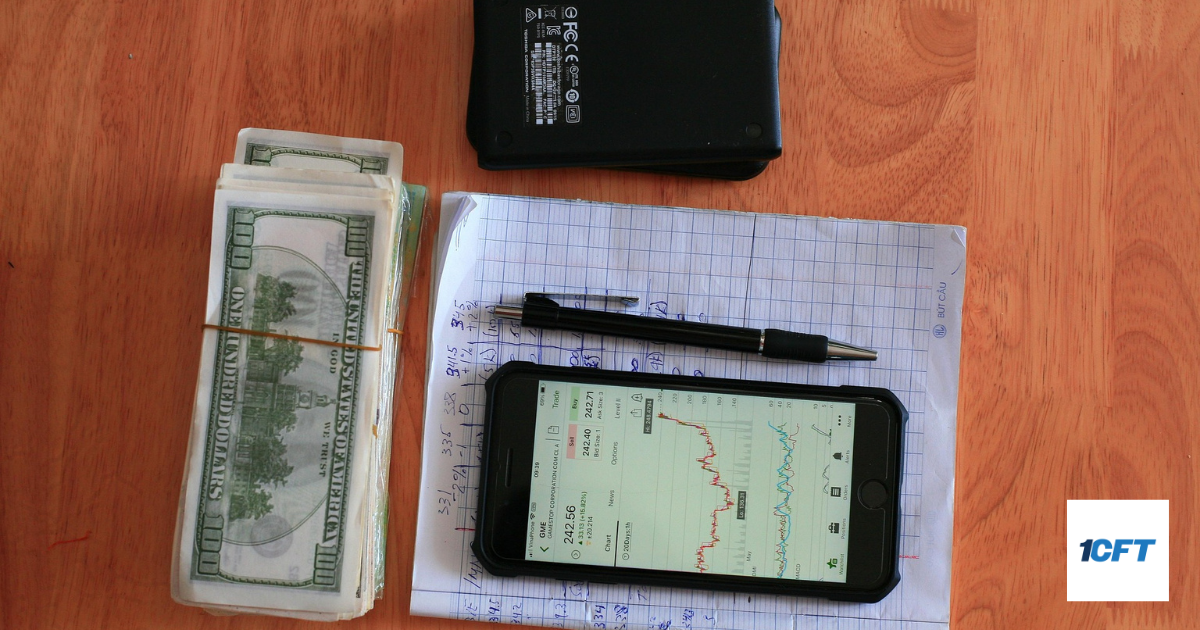
Backtesting is one of the most practical ways to check whether a trading strategy has potential before using it in a prop trading challenge. It does not guarantee future profits, but it helps traders understand how their method behaved in previous market conditions, what risks it created and whether it may fit the rules of a funded account.
What Is Backtesting and How Does It Work in Practice?
Backtesting is the process of testing a trading strategy on historical market data. Instead of entering the market live immediately, the trader checks how a specific set of rules would have performed in the past. This can include entries, exits, stop losses, take-profit levels, risk per trade, trade frequency and drawdown.
The purpose of backtesting is not to predict the future perfectly. Markets change, and no historical test can guarantee that the same results will repeat. The real purpose is to understand whether a strategy has structure, logic and measurable behavior.
A trader who does not backtest often relies on impressions. They may look at a chart and believe that a setup “usually works.” However, visual memory can be misleading. Traders tend to remember strong examples and ignore situations where the same setup failed. Backtesting forces the trader to look at a larger sample.
For example, instead of saying, “This breakout strategy looks good,” the trader can test fifty, one hundred or several hundred historical examples. They can check how often the setup worked, how large the average win was, how large the average loss was and how deep the drawdowns became.
This is especially important in funded trading because a strategy must not only be profitable. It must also fit account rules. A method that produces strong long-term returns but large temporary drawdowns may be difficult to use inside a strict challenge.
A professional Prop trading firm evaluates traders through rules such as profit targets, daily loss limits and maximum overall drawdown. Backtesting helps traders see whether their strategy can operate within those boundaries before real pressure begins.
In practice, backtesting begins with clear rules. The trader must define exactly what qualifies as a valid trade. If the rules are vague, the test becomes unreliable. The trader may unconsciously select only examples that support their belief.
A proper test should include:
- entry conditions,
- exit conditions,
- stop loss logic,
- take-profit logic,
- risk per trade,
- instrument selection,
- trading session,
- invalidation rules.
The more specific the rules are, the more useful the results become.
Backtesting can be done manually or with software. Manual backtesting involves reviewing charts and recording each historical trade according to the strategy rules. This takes time, but it helps traders understand price behavior deeply.
Automated backtesting uses code or platform tools to test rules faster. This can be useful for strategies that are highly systematic. However, automation requires accurate data and precise logic. If the rules are coded incorrectly, the results may be misleading.
An Investment platform that provides historical data, charting tools and performance statistics can make backtesting easier. Traders can review past conditions, measure results and compare different assumptions before risking money in a challenge.
For traders using 1CFT, backtesting can serve as preparation for the funded trading environment. It helps answer a practical question: does this strategy have a reasonable chance of reaching the target without exposing the account to unacceptable drawdown?
Backtesting also reveals how often a strategy trades. This matters because some traders expect constant activity, but their strategy may produce only a few valid setups per week. Knowing this in advance can reduce frustration during a challenge.
It also shows the emotional demands of the strategy. If historical testing reveals several losing trades in a row, the trader can prepare mentally. Losing streaks feel less surprising when they have already been observed in the data. Backtesting is therefore not just a technical exercise. It is a way to understand the personality of a strategy before real money, pressure and account rules are involved.
What Benefits Does Testing a Strategy Before a Challenge Provide?
The first major benefit of backtesting is confidence based on data. Many traders enter a challenge with hope. They believe their strategy should work, but they do not have enough evidence. When losses appear, confidence disappears quickly.
Backtesting gives the trader a stronger foundation. If a strategy has been tested across different conditions, the trader can better understand whether a losing trade is normal or whether something is wrong. This does not eliminate stress, but it reduces uncertainty.
The second benefit is better risk management. Backtesting helps traders estimate average loss, maximum drawdown, losing streaks and risk-reward behavior. These numbers are essential in a challenge because the account has strict limits.
For example, if backtesting shows that the strategy can produce six losing trades in a row, the trader should not risk too much per trade. Otherwise, a normal losing sequence could threaten the account.
The third benefit is realistic expectation setting. Traders often expect a strategy to produce fast and smooth profits. Historical testing usually shows that progress is not linear. There are winning periods, losing periods, slow periods and unpredictable sequences.
Knowing this before a challenge helps the trader avoid panic.
The fourth benefit is identifying whether the strategy fits the account rules. Some strategies work well in open personal accounts but poorly under funded conditions. A method may require holding trades over weekends, using wide stops or accepting deep drawdowns. If these elements conflict with account rules, the trader needs to adjust before starting.
A Prop trading platform may provide rules and tools, but the trader must decide whether their strategy fits that environment. Backtesting helps make that decision more objectively.
The fifth benefit is improving entry and exit rules. During testing, traders may discover that certain filters improve performance. They may find that the strategy works better during specific sessions, on specific instruments or under certain volatility conditions.
The sixth benefit is reducing overtrading. When traders know exactly what a valid setup looks like, they are less likely to take random trades. Backtesting reinforces selectivity because it defines the strategy more clearly.
The seventh benefit is identifying weak markets or instruments. A strategy may perform well on major forex pairs but poorly on crypto or commodities. It may work on indices during active sessions but not during low-volatility periods. Testing helps traders focus where their edge is stronger.
The eighth benefit is emotional preparation. Historical data can show the trader how difficult periods may look. If the strategy had drawdowns in the past, the trader can prepare rules for managing them. This makes it easier to stay disciplined when similar conditions appear.
For traders using 1CFT, backtesting can reduce the risk of entering a challenge unprepared. Instead of learning everything under pressure, the trader can identify strengths and weaknesses earlier.
The ninth benefit is better position sizing. Once the trader understands historical drawdown and loss sequences, they can choose risk per trade more intelligently. Position size can be matched to the account rules instead of chosen randomly.
The tenth benefit is better post-challenge analysis. If the live challenge result differs significantly from backtest expectations, the trader can investigate why. Was execution poor? Did market conditions change? Were rules followed? Was the sample too small? Without backtesting, there is no benchmark. Testing a strategy before a challenge is therefore not about creating certainty. It is about reducing avoidable uncertainty.
How Can You Perform Backtesting to Draw Valuable Conclusions?
The first step is to define the strategy precisely. A trader should not begin testing with vague ideas such as “buy when price looks strong” or “sell when the market rejects resistance.” These descriptions are too subjective.
The rules should be clear enough that the same trader could return later and identify the same setups consistently.
The second step is to select instruments and timeframes. A strategy should be tested in the markets where it will actually be used. If the trader plans to trade EUR/USD during London and New York sessions, the test should reflect that. If the strategy is designed for indices or crypto, those instruments should be tested separately.
The third step is to use a meaningful sample size. Testing ten trades is not enough. A small sample can be heavily influenced by luck. The trader should aim for a larger set of examples to understand average behavior more reliably.
The fourth step is to record every trade honestly. This means including winning trades, losing trades and unclear situations. Skipping uncomfortable examples makes the test useless. Backtesting should reveal reality, not confirm hope.
The fifth step is to track key data:
- entry reason,
- stop loss,
- take-profit level,
- result,
- risk-reward ratio,
- session,
- instrument,
- trade duration,
- maximum drawdown,
- notes about market conditions.
This information helps the trader see not only whether the strategy made money, but how it made money.
The sixth step is to calculate performance metrics. Useful numbers include win rate, average win, average loss, profit factor, maximum drawdown, longest losing streak and trade frequency. These metrics help determine whether the strategy can realistically survive a challenge.
The seventh step is to compare results with account rules. If the strategy’s historical drawdown is close to the funded account’s maximum loss limit, the trader may need to reduce risk per trade. If the strategy produces too few trades, reaching the profit target may take longer than expected.
The eighth step is to avoid overfitting. Overfitting happens when a trader adjusts rules too much to match historical data. The strategy may look perfect in the past but fail in live trading because it was built around specific historical patterns.
- A useful strategy should have logic, not only optimized numbers.
The ninth step is to forward test after backtesting. Forward testing means applying the strategy in real time on a demo or low-risk environment before using it in a challenge. This helps check whether the trader can execute the rules under live conditions.
The tenth step is to review results regularly. Backtesting is not something done once and forgotten. Markets evolve, and strategies may need refinement. Traders should compare live performance with historical expectations. A trader using 1CFT can treat backtesting as part of a complete preparation routine. The test helps define the plan before the challenge begins and provides a reference point during performance review.
The most valuable backtesting conclusions are practical. The trader should finish the process knowing which instruments to trade, when to trade, how much to risk, what drawdown to expect and when to stop. If backtesting does not answer these questions, the process needs improvement. In funded trading, preparation can make the difference between emotional guessing and structured execution. Backtesting is one of the best ways to build that structure before real pressure appears.
Backtesting a strategy before a challenge is worth the time because it helps traders understand how their method behaves before they risk fees, time and account access. It cannot guarantee future success, but it can reveal historical performance, drawdown behavior, trade frequency and weaknesses in the strategy. Traders who test their approach carefully can enter a challenge with clearer expectations, better risk rules and stronger confidence. In prop trading, preparation does not remove uncertainty, but it can reduce avoidable mistakes and improve the quality of every decision.