
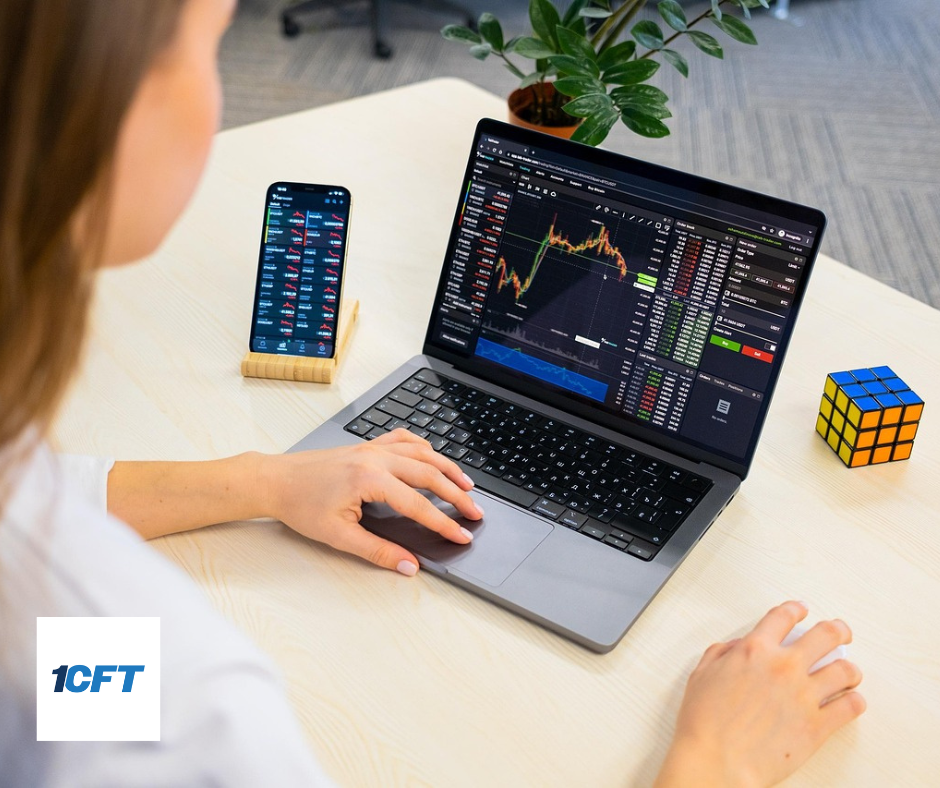
A funded account is one of the key elements of modern prop trading and at the same time the point where the interests of the trader and the trading firm intersect. In practice, this means a relationship based on clearly defined rules, in which a prop trading firm provides capital while the trader is responsible for its efficient and disciplined use. Although from the outside this model is sometimes perceived as a simple arrangement of “trading with someone else’s money,” in reality it is a complex operational, legal, and financial structure.
Contract Structure
In the pro-trading model, a funded account is neither a reward nor a form of credit, but a working tool. The trader gains access to capital on the condition of accepting rules designed to protect the firm’s funds. As a result, technological infrastructure plays an increasingly important role, and the trading platform becomes the place where the entire agreement is executed in practice. Solutions such as the pro-trading platform 1cft show that this cooperation is systemic rather than discretionary, which is often emphasized in analyses and 1cft reviews.
Understanding how a funded account operates is crucial for any trader considering cooperation with a pro-trading firm. It is precisely the contract structure and the profit-sharing mechanism that determine whether this model becomes real support for development or a source of frustration and misunderstanding.
The foundation of a funded account is a contract regulating the relationship between the trader and the firm. Although specific provisions may vary, the core principle remains unchanged: the prop trading firm provides capital and infrastructure, while the trader commits to trading in accordance with defined rules. The contract does not guarantee profits but sets the framework within which the trader may operate.
One of the most important elements of the contract is risk limits. Maximum drawdown, daily loss limits, and position-opening rules are not merely technical guidelines, but an integral part of the agreement. The pro-trading platform automatically monitors compliance, reducing room for subjective interpretation. For many traders, this represents a significant shift from classic trading, where rules are often self-imposed.
The contract also defines the trader’s level of autonomy. In the prop trading model, decision-making freedom is always subordinated to the interests of capital. Restrictions may apply not only to risk, but also to instruments, trading hours, or applied strategies. From the perspective of the pro-trading firm 1cft, such provisions aim to standardize operations and reduce systemic risk. For the trader, this means working within clearly defined operational boundaries.
Payouts and Profit Sharing
One of the key aspects of a funded account is the payout mechanism and profit-sharing structure. This element has the greatest influence on how attractive the cooperation is perceived to be. In the pro-trading model, profits generated on a funded account are divided between the trader and the firm according to predefined proportions. The contract specifies what portion of the result belongs to the trader and how frequently withdrawals may be made.
For a prop trading firm, profit sharing serves both a motivational and a control function. Regular payouts are possible only if rules are respected and stable risk parameters are maintained. The trading platform plays a crucial role here, enabling continuous performance monitoring and automated settlement of results. In solutions such as the pro-trading platform 1cft, this process is integrated into the entire account management system.
It is important to note that receiving profit payouts does not equate to owning the underlying capital in the traditional sense. The trader receives a share of the generated result but does not gain control over the base capital. This distinction is often a source of misunderstanding, which is why individuals interested in this model frequently analyze 1cft reviews to understand how payouts and settlements function in practice.
The profit-sharing structure and payout frequency directly affect a trader’s working style. The more transparent the rules, the easier it is to build a long-term cooperation strategy with the firm. In such cases, a funded account becomes not only a source of capital but a stable operational environment in which the trader can develop their craft within clearly defined rules.
Trader Requirements
A funded account in the prop trading model comes with clearly defined requirements that go beyond the mere ability to execute profitable trades. A prop trading firm primarily expects consistency, discipline, and the ability to operate within imposed rules. In this model, trading ceases to be purely an individual activity and begins to resemble an operational role within a larger structure.
The fundamental requirement is strict adherence to risk-management principles. Loss limits, maximum drawdown thresholds, and permitted position sizes are not subject to negotiation. The pro-trading platform monitors these parameters in real time, and breaches usually result in immediate termination of cooperation. For the pro-trading firm 1cft and similar entities, this is a form of capital protection rather than a personal sanction.
Performance stability is equally important. A trader who produces irregular results or relies on single high-risk trades does not fit the assumptions of the pro-trading model. Repeatability and a process-oriented approach are required, which often proves more challenging than market analysis itself. As a result, many traders realize over time that a funded account requires a change in mindset rather than simply scaling existing habits.
Organizational aspects also matter. The trading platform used in prop trading serves as a working tool, and the trader is expected to regularly monitor statistics, report results, and respond to system signals. For some individuals, this is a natural professional environment; for others, it represents excessive formalization that limits their sense of autonomy.
Most Common Points of Dispute
Despite clearly defined rules, cooperation on a funded account can give rise to disputes and misunderstandings. One of the most frequent points of contention is the interpretation of risk rules. Traders often perceive limits as overly restrictive, especially during periods of heightened market volatility. From the perspective of the prop trading firm, however, these limits are essential for protecting capital and maintaining system coherence.
Another area of conflict concerns payouts. Although the profit-sharing mechanism is described in the contract, questions may arise in practice regarding timing, conditions, or additional formal requirements. In such situations, transparency of processes and the way the pro-trading platform 1cft or other systems communicate account status and settlements play a key role. These aspects are often examined in the context of 1cft reviews.
Termination of cooperation can also be contentious. For the trader, losing a funded account means losing access to capital, even if positive results were previously achieved. The pro-trading firm, however, must make decisions based on overall risk assessment rather than isolated periods of profitability. A lack of understanding of this logic often leads to a sense of unfairness, particularly among traders who view a funded account as a substitute for a personal trading account.
A funded account is a form of cooperation that requires a mature approach from both the trader and the funding firm. Prop trading is based on clearly defined rules designed to protect capital and ensure model stability. For the trader, this means operating within constraints, maintaining regular performance oversight, and accepting that autonomy is subordinated to system interests.
Understanding the requirements and potential points of dispute allows for a realistic assessment of whether the funded account model is the right working environment. A prop trading firm supported by an advanced trading platform can create stable conditions for development, but only for traders who are prepared to treat trading as a craft rather than improvisation. Ultimately, success in this arrangement depends not on access to capital alone, but on the ability to sustain long-term cooperation within clearly defined frameworks.