
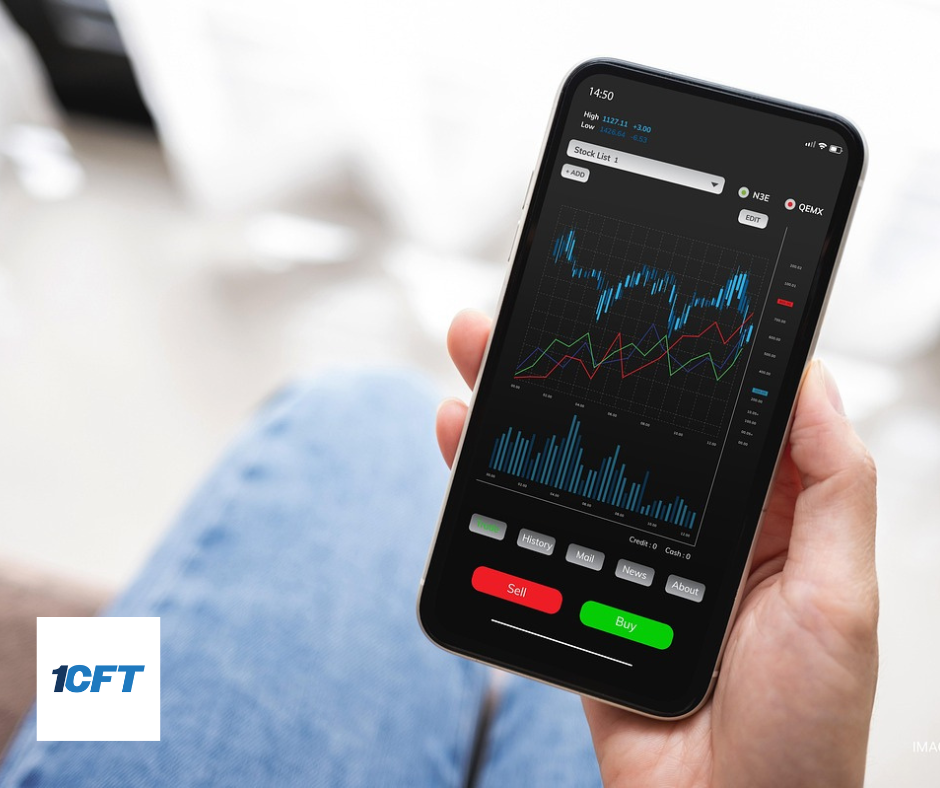
Every prop trading firm operates like a precisely designed mechanism in which the key role is played not only by the trader, but above all by capital and systemic infrastructure. Although prop trading is often perceived from the outside mainly through the lens of individual trader performance, in reality the stability and scalability of this model are determined by the processes operating in the background. These processes form the engine that drives the entire organization and distinguish a professional pro‑trading firm from amateur attempts at financing trading with external capital.
Sources of Capital and Its Allocation
The fundamental resource of every prop trading firm is capital used to finance trading activity. Contrary to popular belief, these funds rarely come from a single source. A pro‑trading firm typically relies on its own capital, reinvested profits, and in some cases external financing structures. However, what matters most is not only where the capital comes from, but how it is allocated among traders and strategies.
Capital allocation in prop trading is data‑driven. Traders receive access to funds gradually, and the level of funding is closely linked to their performance history, consistency, and ability to comply with rules. A professional trading platform enables precise tracking of statistics such as maximum drawdown, risk‑to‑reward ratio, and result repeatability. Based on these metrics, the firm decides who should be entrusted with more capital and to what extent.
In practice, this means that capital allocation is not a one‑time decision, but a dynamic process. A trader who consistently follows strategy assumptions may see limits increased, while deteriorating performance can lead to capital reduction. This approach allows a prop trading firm to scale operations without taking excessive risk. This is precisely why users analyze 1cft reviews, seeking to assess how transparently and effectively this mechanism functions in practice.
At the core of this system are two elements: properly sourced capital and rigorous risk control. Without them, even the most talented traders would be unable to generate long‑term results. For this reason, a modern pro‑trading platform is not merely a tool for placing orders, but an integrated environment for managing capital, risk, and operational efficiency. Examples such as the pro‑trading platform 1cft illustrate how far this model has evolved toward an organized, process‑driven approach to trading.
How Risk Control Works
Risk control is the foundation without which the pro‑trading model could not function. Unlike traditional trading, where the trader independently decides the scale of risk, a pro‑trading firm imposes strict limits and rules. Their purpose is not to restrict profit potential, but to protect capital as a shared organizational resource.
A modern pro‑trading platform integrates risk‑control mechanisms directly into the trading process. Daily loss limits, maximum drawdown thresholds, and position‑size restrictions are enforced automatically. As a result, even in moments of strong emotion, a trader cannot exceed predefined boundaries. Solutions applied by the **pro‑trading firm 1cft** demonstrate that technology acts as an active guardian of discipline.
Importantly, risk control operates simultaneously on multiple levels. It applies both to individual trades and to entire portfolios of traders. The trading platform analyzes correlations between strategies, exposure to specific markets, and potential extreme scenarios. This makes prop trading a model resilient to individual errors and sudden market changes.
Primary Revenue Models
Although prop trading is often associated exclusively with a firm’s share in trader‑generated profits, in reality revenue models are more diversified. The core and most desirable income source remains participation in actual market profits. This element builds long‑term organizational value and justifies investment in infrastructure, technology, and trader development.
At the same time, many pro‑trading firms operate on a hybrid model. In addition to trading profits, significant revenue may come from qualification processes, skill assessments, and access to specific programs. From an organizational perspective, this stabilizes cash flow and finances operational infrastructure regardless of short‑term market conditions. This is why users analyze **1cft reviews** to understand how much emphasis a firm places on real trading versus selection processes.
There are also models in which the firm acts primarily as an infrastructure and working‑environment provider. In this approach, the pro‑trading platform itself becomes a product, and revenue is generated indirectly through user scale and activity volume. Regardless of the model, transparency remains critical. In the long term, only prop trading firms that clearly communicate their revenue sources can build trust and maintain a stable trader base.
Areas Where Conflicts of Interest Arise
Despite its advantages, the prop trading model is not free from potential conflicts of interest. One commonly cited issue is the relationship between qualification processes and actual trader funding. If a pro‑trading firm derives a significant portion of revenue from entry fees, questions may arise as to whether its primary objective is trader development or participant volume maximization.
Another risk area concerns risk‑management rules. While restrictive limits protect firm capital, they may also constrain trader strategy potential. If a pro‑trading platform enforces rules that are overly rigid or misaligned with market conditions, traders may feel the system works against them. It is often in such situations that critical **1cft reviews** and comparisons between prop trading firms emerge.
Conflicts may also arise around profit sharing and capital scaling decisions. A trader delivering stable results expects increased funding, while the firm must consider overall portfolio risk. Lack of clear criteria leads to frustration and undermines partnership perception. Therefore, a professional prop trading firm should treat transparency not as a formality, but as a core business strategy.
The engine driving every prop trading firm consists of capital, technology, and rigorous risk‑management processes. Their interaction determines whether proprietary trading is sustainable and resilient to market volatility. Prop trading is not solely about individual talent, but about a system capable of identifying, developing, and scaling that talent in a controlled manner.
Understanding revenue models and potential conflicts of interest allows for a more realistic view of this market segment. A transparent pro‑trading firm supported by an advanced trading platform can create an environment beneficial both to traders and to the organization itself. Ultimately, it is not promises of quick profits, but the quality of processes and consistency in execution that determine whether prop trading becomes a stable business model or merely a passing trend.